
Updates/Guides, perspectives & news
Field notes
from ModAstera
Practical guides on validating, deploying and governing AI in regulated work, plus signed essays and news from the team.
- Guides
- 21
- Perspectives
- 4
- News posts
- 10
- Last updated
Medical AILatest guidePart 6 of 8 · Validating medical AI
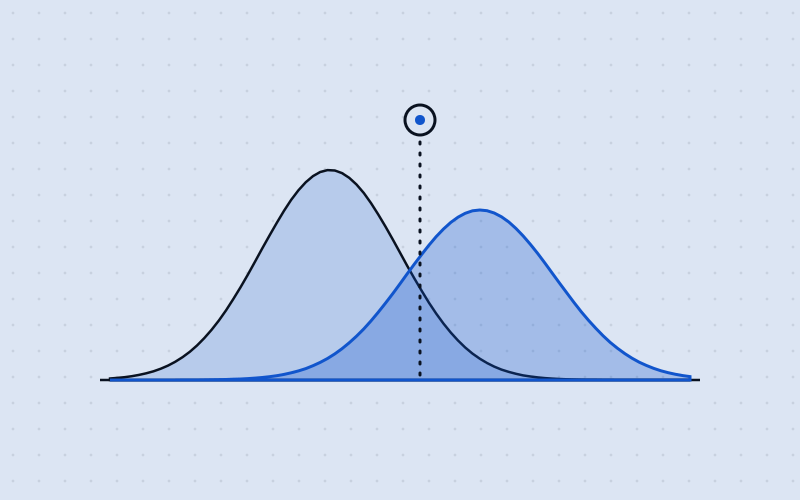
Medical AI Decision Thresholds: Turning Model Scores into Reviewable Operating Points
A medical AI score becomes actionable only through a documented operating point that connects intended use, error trade-offs, review capacity, validation evidence, and monitoring.

Start here/Reading path
Validating medical AI, in eight steps
From data readiness to post-release monitoring: the guides in the order a medical AI project needs them.
Library/All guides
More guides
Showing 6 of 18 · Newest first

Medical AIFull report
How Much Data Is Needed to Train a Medical AI Model
39 min read · 28 Aug 2026

Medical AIGuide
External Validation for Medical AI: Testing Across Sites, Devices, and Populations
9 min read · 25 Aug 2026
Medical AIGuide
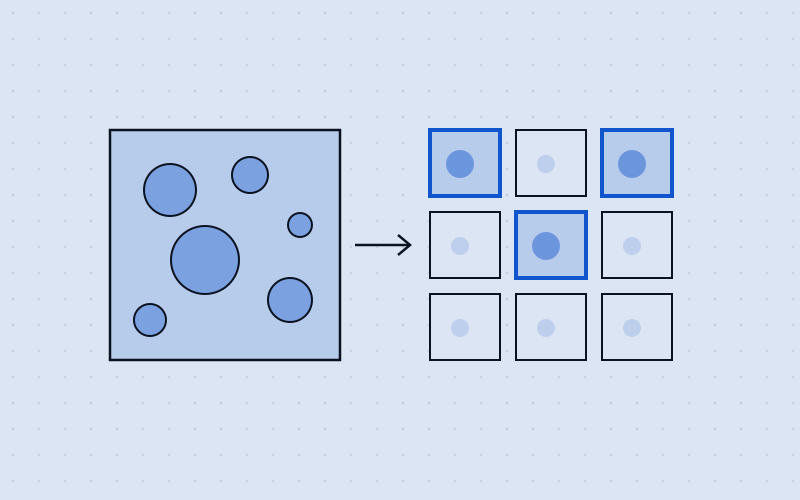
Pathology Image Retrieval: How to Build a Reviewable Similar-Case Workflow
9 min read · 18 Aug 2026
Medical AIGuide
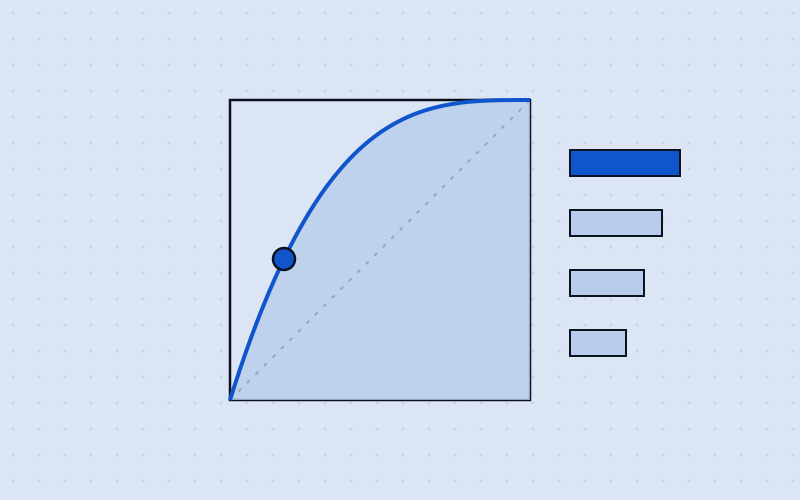
How to Evaluate Medical AI Models Beyond Accuracy
9 min read · 11 Aug 2026
Medical AIGuide
Data Leakage in Medical AI: Building Trustworthy Train, Validation, and Test Splits
9 min read · 4 Aug 2026

Regulated workflowsGuide
AI Model Monitoring in Regulated Workflows: From Drift Signals to Human Review
11 min read · 28 Jul 2026
Perspectives/Opinion
Signed essays
Longer views on medical AI, automation and where both are heading.
- Perspective · 3 min read
How AI and Large Language Models are Revolutionizing Electronic Health Record Systems
The integration of AI and LLMs into EHRs is not just a technological upgrade—it’s a necessary evolution to reduce burnout, improve accuracy, and deliver better patient outcomes.
Joshua Baird11 Jul 2025 - Perspective · 3 min read
Current Landscape, Future Outlook, and Challenges of AI in Medical Diagnosis
Diagnostic AI can boost healthcare quality and efficiency, exactly what Japan needs amid growing systemic pressures. Realizing this promise demands coordinated action from clinicians, engineers, policymakers, and industry leaders.
Kanon Asari3 Jul 2025 - Perspective · 6 min read
Workflows, AI Agents, and the Value Proposition Problem
In today's fast-evolving world of automation and AI, organizations must rethink traditional workflows. AI agents are reshaping the way we work by moving beyond rigid, rule-based systems to adaptive, intelligent solutions.
Joshua Owoyemi23 Jan 2025
News/From the team
Company news
Programs, partnerships and people.
- 14Aug 2026
 14 Aug 2026ModAstera Joins the J-StarX UK HealthTech Launchpad
 - 28Apr 2026
 28 Apr 2026ModAstera and Wellgen Medical Announce Strategic AI Collaboration to Transform Cancer Cytology Diagnostics
 - 2Mar 2026
 2 Mar 2026Welcome Prof. Christian Aldridge as Chief Medical Officer
 - 24Dec 2025
 24 Dec 2025ModAstera Showcases Medical AI Innovation at Qualcomm QAIPI 2025 APAC Demo Day
Working through a validation plan?
Talk to the team that builds MAEA about your data, evaluation and review workflow.